


CAROL WILLIAMS, FIRST LADY OF SALSOUL

Per la disco music l’anno 1976 è probabilmente quello più importante. Dopo un periodo che possiamo definire ‘di riscaldamento’ dominato da quella definita musica pre-disco, le classifiche e non solo quelle specializzate in musica black, cominciano a popolarsi di artisti fino a quel momento apprezzati soprattutto dal pubblico che frequentava i disco club.
Il 1° maggio 1976 debutta nella classifica Hot Soul Singles di Billboard il primo singolo di Carol Williams, pubblicato da Salsoul Records, fondata a New York dai tre fratelli Cayre, etichetta che già occupava un posto in prima fila nel mondo dei club. Il brano è “More”, cover di una canzone pop del 1963 di Kai Winding. Carol è la prima cantante della scuderia Salsoul.
Il 12 febbraio 1977 debutta nella National Disco Action di Billboard un altro singolo, rigorosamente un 12 inch sempre su Salsoul, dove su un lato troviamo “Come back” mentre sull’altro “Love is you”.
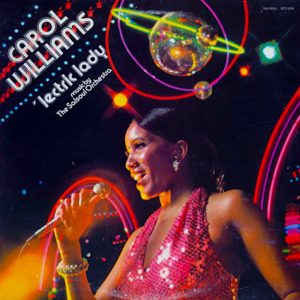
A questo punto per Carol Williams è tempo di uscire con un intero album. Arriva così “‘Lectric lady”, in collaborazione con la Salsoul Orchestra al gran completo tra cui Vincent Montana Jr., Ron Baker, Bobby Eli, Earl Young e Norman Harris.
L’album, oltre ai singoli citati, contiene altre gemme come “Danger sign”, “You’re so much a part of me” e “Rattlesnake” già uscita addirittura nel 1975.
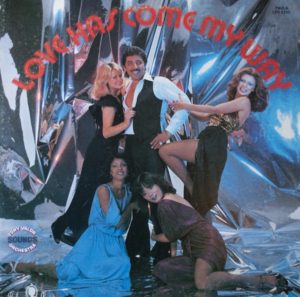
Nel 1978 la Williams collabora con Tony Valor, prolifico autore e produttore per realizzare un’altra disco-hit, “Love has come my way”.
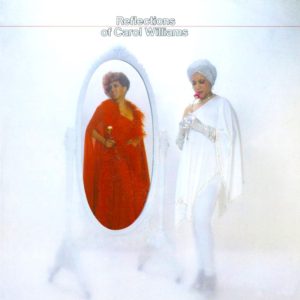
Nel 1979 Carol pubblica un suo nuovo album intitolato “Reflections of Carol Williams”, questa volta senza Salsoul Orchestra e con una nuova etichetta, la canadese Quality Records, che contiene il singolo di successo “Dance the night away”.
Carol Williams si è esibita nei club più importanti degli Stati Uniti, in Francia e in Canada, spesso insieme ad altre grandi star.
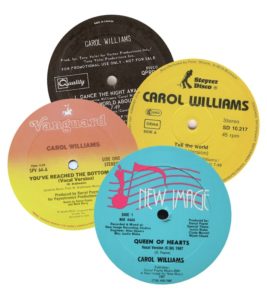
Negli anni ’80, trovando una nuova celebrità con la musica R&B, è presente nelle classifiche con brani come “Can’t get away from your love”, “You’ve reached the bottom of the line”, “What’s the deal” e “Queen of hearts”.
Carol Williams è impegnata con ‘Legends of Vinyl – America’s Original Pioneer Club Disc Jockeys’, organizzazione no-profit nata per valorizzare e fornire assistenza agli ex DJ dell’era disco.
Ed è stato proprio un disc jockey a far brillare di nuova luce Carol Williams. Spiller è un DJ italiano che con il suo singolo intitolato “Groovejet (If this ain’t love) ha sbancato le classifiche internazionali. Per realizzare il brano, Spiller ha utilizzato il sample di “Love is you” e, per celebrare il 25° anniversario di “Groovejet”, pubblicato infatti nel 2000, sul palco di Disco Diva, 11^ edizione, li potremo ammirare insieme, venerdì 27 giugno.
For disco music, the year 1976 is probably the most important one. After a period that we can define as a ‘warm-up’ dominated by what is defined as pre-disco music, the charts, and not only those specializing in black music, begin to be populated by artists who until then had been appreciated mainly by the disco club-going public.
On May 1, 1976, Carol Williams’ first single debuted on Billboard’s Hot Soul Singles chart, released by Salsoul Records, founded in New York by the three Cayre brothers, a label that was already occupying a front row seat in the club world. The track is “More,” a cover of a 1963 pop song by Kai Winding. Carol is the first singer in the Salsoul stable.
February 12, 1977, another single debuts on Billboard’s National Disco Action, strictly a 12-inch also on Salsoul, where on one side we find “Come back” while on the other “Love is you.”

At this point it is time for Carol Williams to come out with an entire album. Thus comes “’Lectric lady,” in collaboration with the full Salsoul Orchestra including Vincent Montana Jr., Ron Baker, Bobby Eli, Earl Young and Norman Harris.
The album, in addition to the aforementioned singles, contains other gems such as “Danger sign,” “You’re so much a part of me,” and “Rattlesnake,” already released as early as 1975.
In 1978 Williams collaborated with prolific songwriter and producer Tony Valor to make another disco-hit, “Love Has Come My Way.”

In 1979 Carol released her own new album entitled “Reflections of Carol Williams,” this time without Salsoul Orchestra and with a new label, Canadian Quality Records, which contained the hit single “Dance the night away.”
Carol Williams has performed in major clubs in the United States, France and Canada, often with other big stars.
In the 1980s, finding new stardom with R&B music, she hit the charts with songs such as “Can’t Get Away from Your Love,” “You’ve Reached the Bottom of the Line,” “What’s the Deal,” and “Queen of Hearts.”
Carol Williams is involved with ‘Legends of Vinyl – America’s Original Pioneer Club Disc Jockeys,’ a nonprofit organization established to value and provide assistance to former DJs of the disco era.
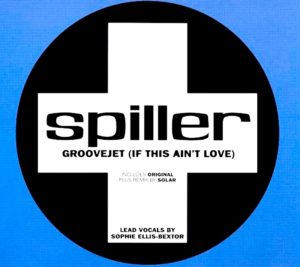
And it was a disc jockey who made Carol Williams shine in a new light. Spiller is an Italian DJ whose single titled “Groovejet (If this ain’t love) smashed the international charts. To make the track, Spiller used the sample of “Love is you,” and to celebrate the 25th anniversary of “Groovejet,” released in fact in 2000, on the stage of Disco Diva, 11th edition, we will be able to see them together, Friday, June 27.
Lascia un Commento
Vuoi partecipare alla discussione?Sentitevi liberi di contribuire!